A Convivial Conspiracy
An invitation to mark the centenary of Ivan Illich

We’re spreading a rumour. Over the first weekend in September, 2026, there will be local gatherings around dinner tables and picnic blankets and in convivial spaces of different kinds, in places around the world, to mark what would have been the 100th birthday of Ivan Illich. You can be part of it.
Read on to learn more, or head over to the Illich at 100 page on the HOME website to find out what’s happening near you or to put your hand up as a “local contact” for people who want to gather.


A generous bowl of spaghetti, a supply of red wine, a lit candle on the table and an extra place set for the stranger who might arrive at your door. That was Ivan Illich's recipe for conviviality. It still is, among his co-conspirators and those who have found themselves walking in his footsteps.
Illich was a man around whom myths gather, while labels fail to stick. There’s no elevator pitch for his thinking, it’s more of a staircase without a bannister. People arrive at his work from different directions: theologians and anarchists, degrowthers and reactionary feminists, hackers and technology critics. Wherever you’re coming from, keep reading and you’ll find something to trouble you, yet many of us go on finding nourishment at the table he set with his friends.
If you’ve been reading my work for any length of time, then you’ve felt the benefit of Illich’s thinking, whether you know it or not. Much the same is true – to pick just a few examples – if you’ve read Lewis Hyde’s The Gift, or drawn inspiration from the work of Asset-Based Community Development, or felt aligned with the slogan ‘One No, Many Yeses’. (I’ll write more soon about these and other traces of his influence.)
I first caught the rumour of Illich’s work in 2003 through a footnote in Alastair McIntosh’s Soil and Soul. It turned out he had died just a few months earlier. When I began to collect copies of his books, they were selling for pennies secondhand with “withdrawn” stamps from university libraries which seemed to have arrived at a collective decision to let him go. That could have been the end of the story.
Yet, in all kinds of places, people began to pick him up. If you want the heavyweight examples, then start with Charles Taylor, who drew on Illich in the latter part of A Secular Age, and Giorgio Agamben declaring in 2013 that Illich’s work was approaching “the hour of its legibility”. But when I think of the ongoing liveliness of his work, what comes to mind are conversations I’ve been part of over the years on community farms and in squatted free schools and churches and arts spaces and the upstairs rooms of pubs. I think of the friendships that grew out of many of those conversations.
This September – on Friday 4th, to be precise – Illich would have turned 100. As I wrote a few weeks ago, my friend Ayşem Mert suggested that we ought to hold a gathering here in Östervåla that weekend, and we’re going to do so. But out of that conversation, a rumour started, a convivial conspiracy, the whisper of a scattering of gatherings around kitchen tables and picnic blankets and in bookshops and theatre spaces and homesteads, where people get together to remember Illich’s work or to learn more about it.
Quite how far this will spread, I don’t know, but when I dropped a mention of it in the subscriber chat for Writing Home a couple of days ago, it brought responses from four continents with people offering to host events or to be a local contact for those who want to get together.
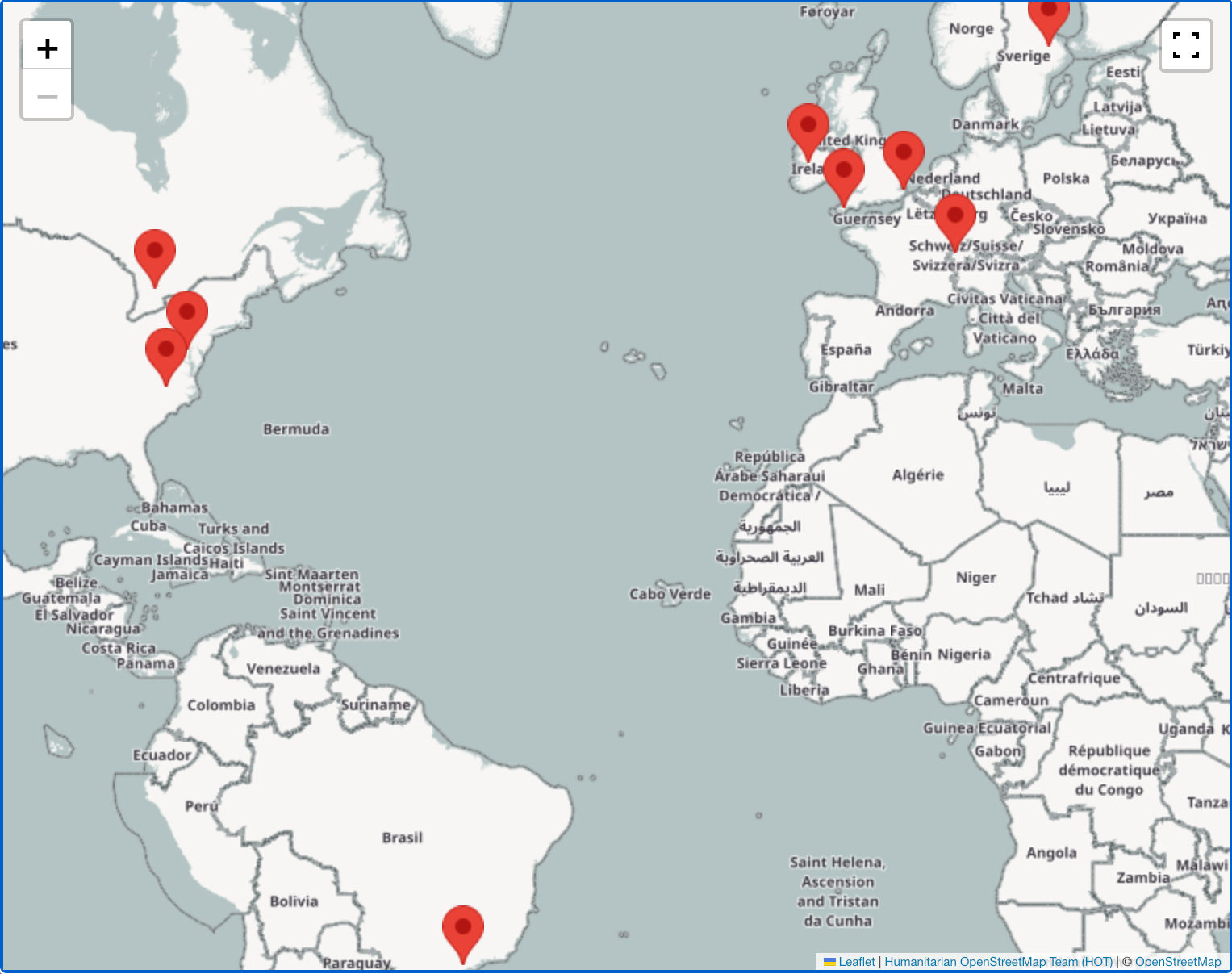
You don’t need to be some kind of Illich expert to host a gathering. If you’ve got the curiosity to meet others near you who are drawn to his work, then you’re warmly welcome to put up your hand as a local contact and see what happens. And if you're already involved in organising an event in connection with his centenary, let us know and we’ll add you to the map.
There’s a story Illich told about a conversation he had in the 1950s with the French philosopher Jacques Maritain, who was puzzling over a new English word for which he could find no translation. The word was ‘planning’:
He asked me if this was an English word for “accounting,” and I told him no… if it was for “engineering,” and I said no… and then at a certain moment he said to me, “Ah! Je comprends, mon cher ami, maintenant je comprends. Now I finally understand. C’est une nouvelle espèce du péché de présomption. Planning is a new variety of the sin of pride.”
Elsewhere, Illich offered a definition of hope as “remaining open to surprise”. It’s in that spirit of both those comments, then, that we share this invitation. May it travel like dandelion seeds on the wind.
Dougald Hine
To praise conviviality in the spirit of Ivan Illich is to remember that the future is not engineered; it is befriended. As we gather in response to Dougald’s invitation, we acknowledge that the giant institutions of our age cannot give us what we actually need. True hope does not look to the sky for salvation; it looks across the room. It is found in autonomous, creative intercourse among persons, in the sacred obligation of hospitality, and in the quiet courage to be present with one another. In this circle, through our intentional limits, we find an abundant freedom. This sounds very utopian and idealistic. We need to incarnate the encounters, the friendships, the real connections and nows.
Wonderful idea. I came to Illich through many avenues but especially the writings of L.M. Sacasas e.g. https://theconvivialsociety.substack.com/
I wonder if Michael might host an event. I can try asking